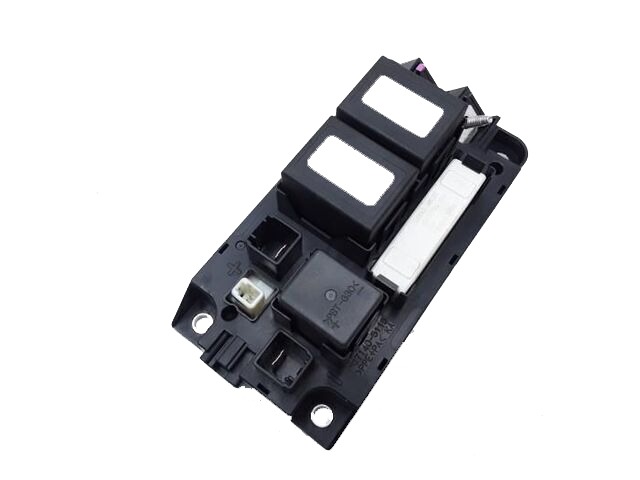
Main System Relays
The Toyota Hybrid System II high-voltage system uses three relays to manage power distribution, protect components, and control the flow of electricity.
System Main Relays in the system:
SMR1: Connects the high-voltage battery to the positive side of the power circuit.
SMR2: Connects the high-voltage battery to the negative side of the power circuit.
SMR3: Used to pre-charge the high-voltage bus before the main relays close, to prevent sudden inrush currents.
Pre-charge Circuit:
Before the main relays close, the pre-charge circuit is activated by closing the SMR3. It allows current to flow through a resistor to the inverter, charging the capacitors slowly to prevent a high inrush current, which could damage components.
Once the capacitors are pre-charged and the voltage is stabilised, SMR1 and SMR2 close, bypassing the resistor, and the full current flows from the battery to the inverter.
Control Process:
The Hybrid Vehicle Control ECU manages the operation of these relays. It monitors the voltage, current, and system conditions to ensure safe engagement of the relays.
When the vehicle is powered on, the ECU first closes the pre-charge relay (SMR3) to stabilise the voltage.
After the capacitors are fully charged, the ECU closes SMR1 and SMR2 to connect the high-voltage battery directly to the inverter.
Relay Operation Steps:
Power-on request (e.g., pressing the start button).
The Hybrid ECU commands SMR3 (pre-charge relay) to close.
Current flows through the pre-charge resistor to the inverter capacitors, gradually charging them.
The ECU monitors the voltage difference across the system. Once it reaches a safe threshold, SMR1 and SMR2 close, fully connecting the high-voltage battery to the system.
The vehicle is now ready to operate, and the high-voltage power is supplied to the electric motors.
Safety Features:
The ECU constantly monitors for any abnormalities, such as overvoltage, undervoltage, or overcurrent. If an issue is detected, it can open the relays to disconnect the high-voltage battery from the rest of the system.
The relays are designed to disconnect quickly in the event of a crash or system malfunction to ensure safety.
The main relays play a crucial role in safely managing the high-voltage system of the THS II by preventing sudden surges and ensuring smooth power flow.